Electric vehicles are no longer new, and you have probably already driven one occasionally. But having an electric company car is a different matter: you manage charging yourself, optimise range on regular journeys and deal with the constraints of a professional context.
In this article, we focus on what really changes in everyday use.
- Regenerative braking is the main difference to get used to.
- Real-world range varies depending on the vehicle model, speed and driving style.
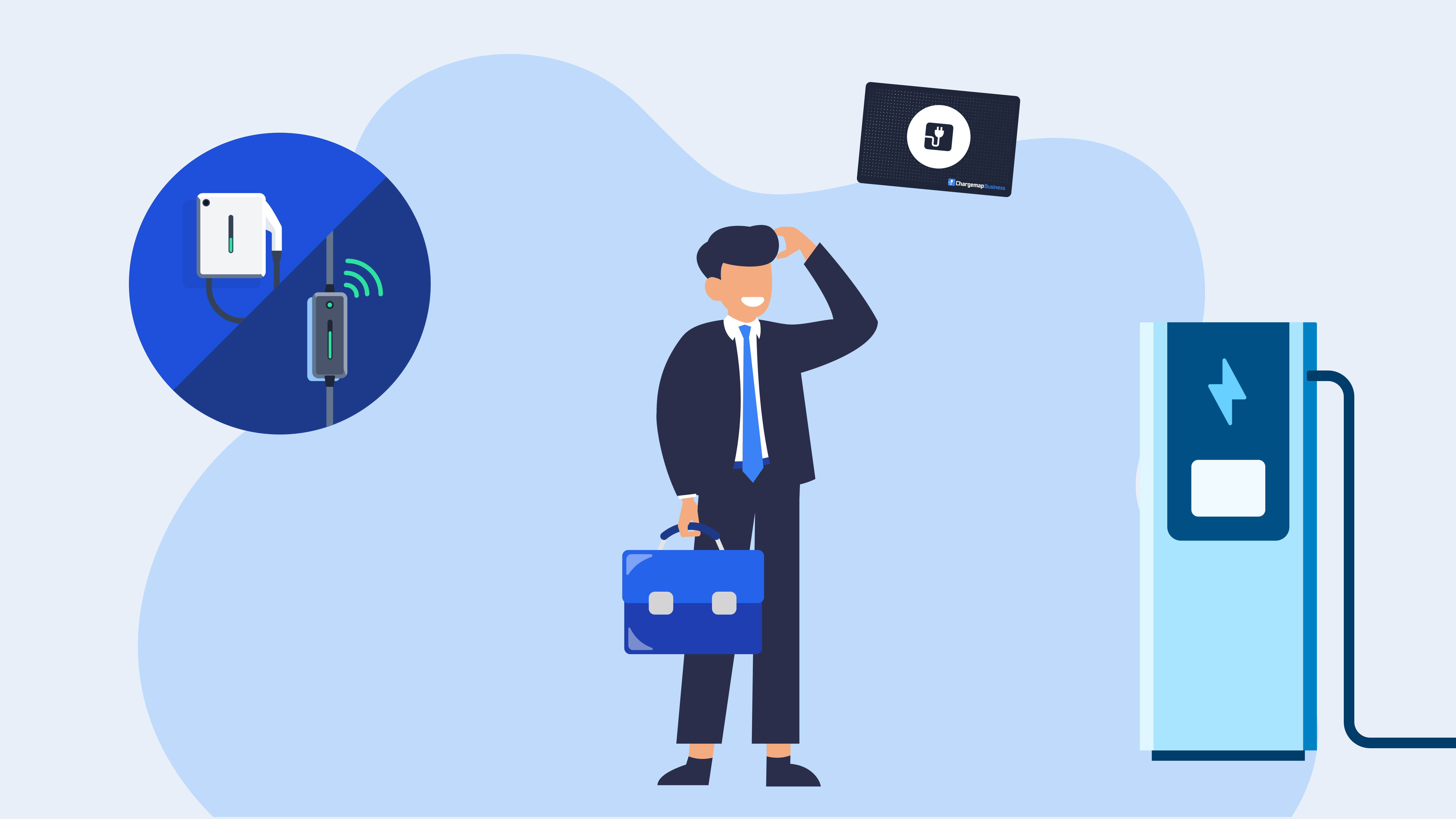
- Charging is organised around 3 situations: at the office, at home, and on the road with a professional charging card.
- An electric company car needs servicing less often than a combustion-engine car, but the annual service remains essential to keep the battery warranty.
Regenerative braking and eco-driving: two habits to adopt
Regenerative braking: unlearning to drive better
Electric vehicles are equipped with energy recovery systems that convert kinetic energy into electricity when braking. This system, called regenerative braking, recharges the battery while driving and reduces wear on conventional brakes. When you lift your foot off the accelerator, the car slows down naturally without needing to use the brakes often, which can be surprising at first. As well as extending battery range, this feature encourages eco-friendly driving.
Eco-driving: when does it really matter?
With electric car range increasing thanks to advances in battery technology, eco-driving seems less and less necessary for everyday use. However, in some situations (long journeys, winter, headwinds, motorways), it can be wise, or even essential, to keep a range margin.
- Long motorway journeys: air resistance at high speed is range's biggest enemy. Reducing your speed on the motorway is the simplest and most effective way to extend your range. The difference can be enough to avoid a charging stop on a long journey.
- Winter: in cold weather, range can drop significantly. Heating the cabin is one of the main sources of consumption. Preconditioning the vehicle (heating it while it is still plugged in, before setting off) is the most effective way to limit the impact.
Range: what changes between occasional and daily use
Situations where real-world range differs from WLTP
The range announced by the manufacturer (WLTP standard) is a laboratory benchmark. In daily professional use, here are some concrete pointers:
- In town and suburban areas: real-world range is often higher than the manufacturer's figure thanks to frequent regenerative braking
- On the motorway at sustained speed: this is where the gap with WLTP is greatest, as aerodynamic drag increases sharply with speed
- In cold weather: cabin heating weighs on the battery and noticeably reduces range, to a degree that varies by model
- Intensive air conditioning or heating: a source of consumption not to be underestimated, especially in summer and winter
The difference with occasional use: when the EV is your everyday car, you quickly learn how that specific model really behaves on your usual journeys. The displayed range becomes a figure you read intuitively, not a source of anxiety.
Simple habits that make a difference over time
A few habits to adopt for stress-free daily use:
- Don't always aim for 100%: most manufacturers recommend charging up to 80% day to day to preserve battery life. Save full charges for long journeys.
- Plan charging rather than putting up with it: don't wait until the last minute. Plug in whenever you can: at the office, at home if you have a charging solution, rather than looking for a charging station in a hurry.
- Precondition in winter: heating or cooling the cabin while the EV is still plugged in saves the battery for driving.
3 ways to charge your electric company car
Workplace charging
Workplace charging is generally done at charging stations installed on site. These charging stations can be installed in company car parks and integrated into electric fleet management. Companies can choose between fast or standard charging stations, depending on their needs and vehicle models.
Home charging
The company can also offer employees the option of charging their electric company car at home, by installing a dedicated charging station or using a connected charging cable (in French). These can be connected to a monitoring solution to automate the reimbursement of home charging costs.
Charging on the road
When travelling, companies provide their employees with professional charging cards so they can charge at public charging stations. It is more practical to use a single charging card, provided by a mobility operator, that gives access to most charging stations in France and abroad. For example, the Business Chargemap Pass enables easy charging on the road.
Servicing electric vehicles
Compared with a combustion-engine model, an electric car needs very little servicing. As a rule, unless used intensively, it comes down to one visit a year to the dealer. This trip to the workshop should not be skipped, however. It keeps the warranty valid, particularly on the batteries. They are robust, but if they had to be replaced outside the warranty, the bill would be very high for the vehicle's owner.
In addition, a visit to the dealer is often an opportunity for a software update. As well as updating the built-in map of available charging stations, it also gives access to new features or fixes certain malfunctions you may not even have noticed.

Need a professional charging card for your travels?
Your company can order Business Chargemap Pass cards in a few minutes, directly online: